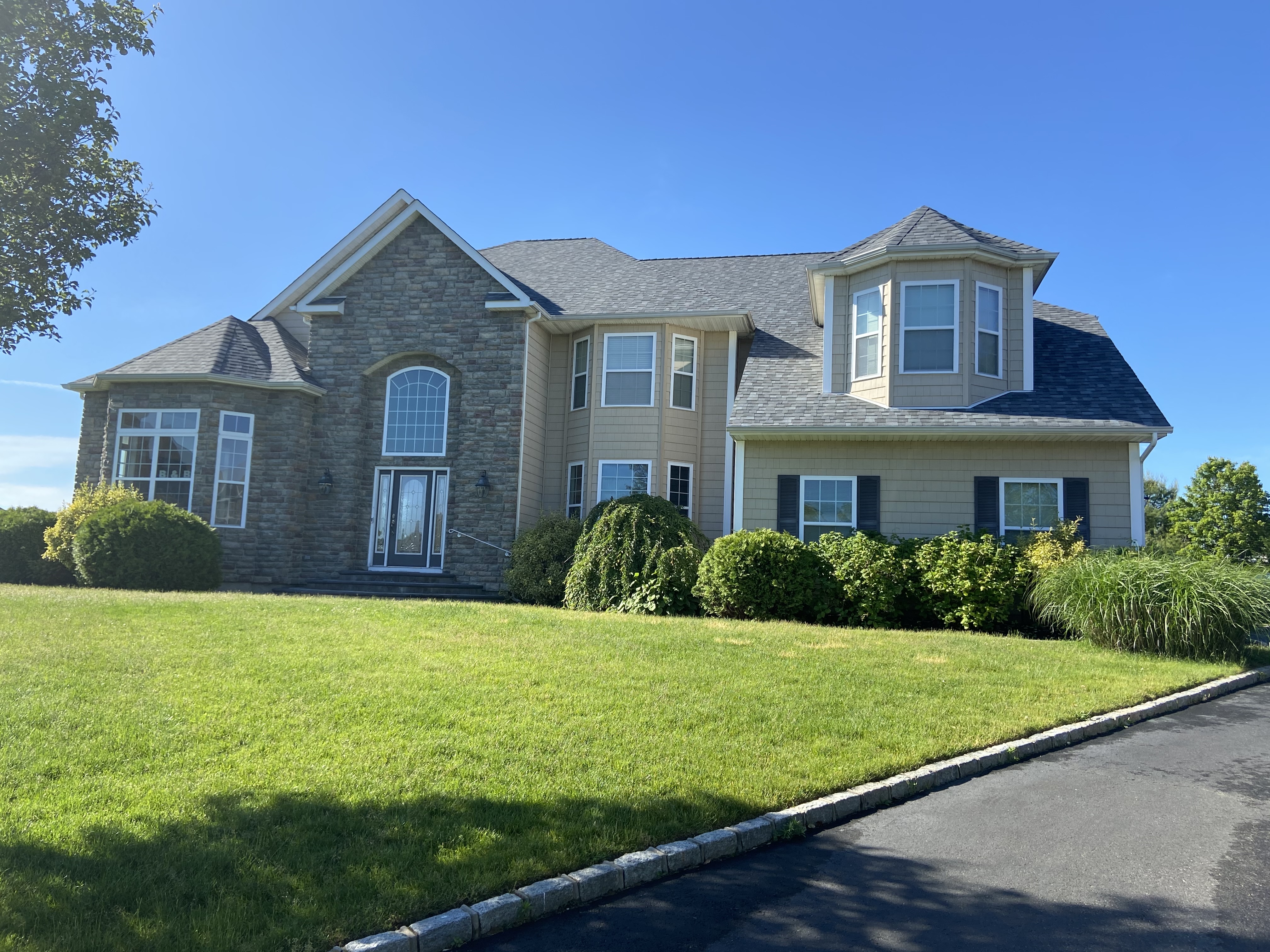

Huntington homes use five main roofing materials: asphalt shingles, metal, slate (natural or synthetic), cedar shake, and flat-roof membranes for low-slope sections. For most homes in Huntington, Melville, Dix Hills, and Northport, architectural asphalt shingles give the best mix of cost, wind resistance, and looks. Metal and slate make sense mainly for waterfront homes. Whatever you choose, installation details like ice protection and corrosion-resistant nails decide how long it lasts here.
We're a roofer in Huntington, New York, with over 26 years of experience installing asphalt shingle roofs on the North Shore. Below, we compare each material honestly and explain how to choose the right one for your house and your plans.
Huntington Roofing Materials at a Glance
Costs below are for a typical Huntington home of about 2,000 square feet, based on local quotes. Your roof's pitch, dormers, and deck condition move the number.
You'll also hear about three other options. They're either a variation of the five above or a poor fit for most homes in Huntington, so we cover them briefly in the sections below:
- 3-tab asphalt shingles: The cheapest, thinnest grade of asphalt. They tear in strong gusts, so we don't recommend them on the North Shore.
- Synthetic slate: A lightweight polymer version of slate. It gives the look without the weight, but its track record on Long Island roofs is shorter.
- Clay and concrete tile: Heavy, and built for hot climates. Most local homes weren't framed to carry it.
Most homeowners we meet are deciding between two rows: architectural asphalt and metal. The sections below explain where each one wins.
Asphalt Shingles (the Default for Huntington Homes)
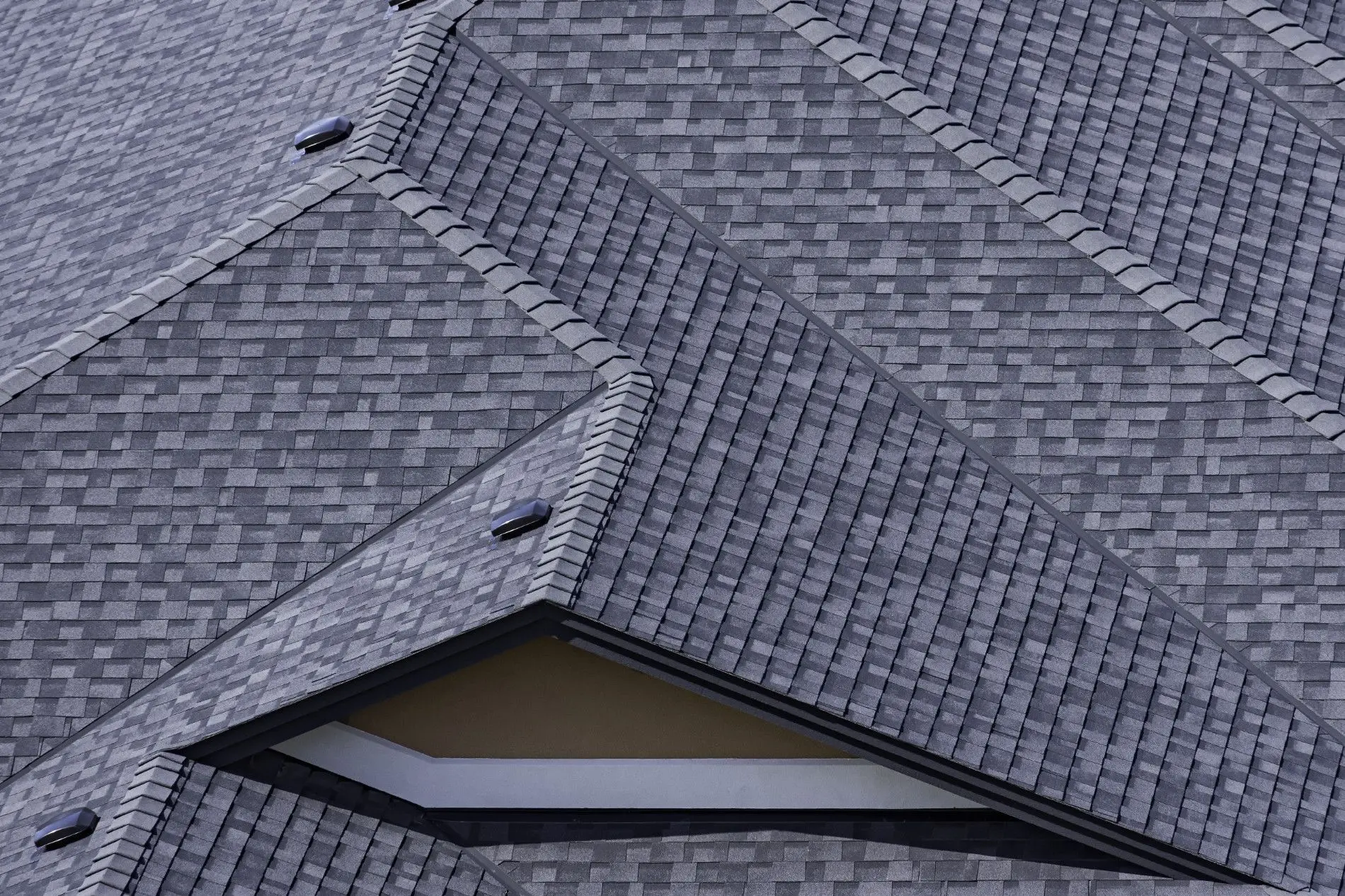
Asphalt shingles are on most roofs in Huntington, Melville, Dix Hills, and Northport because they cost the least per year of service and suit almost every house style. A well-installed architectural shingle roof handles nor'easters, snow, and summer heat for two to three decades.
There are three grades of asphalt shingles, and the difference is thickness.
- 3-tab shingles are a single flat layer. They're the cheapest, and the first to tear off in a strong gust. We don't recommend them anywhere near the water.
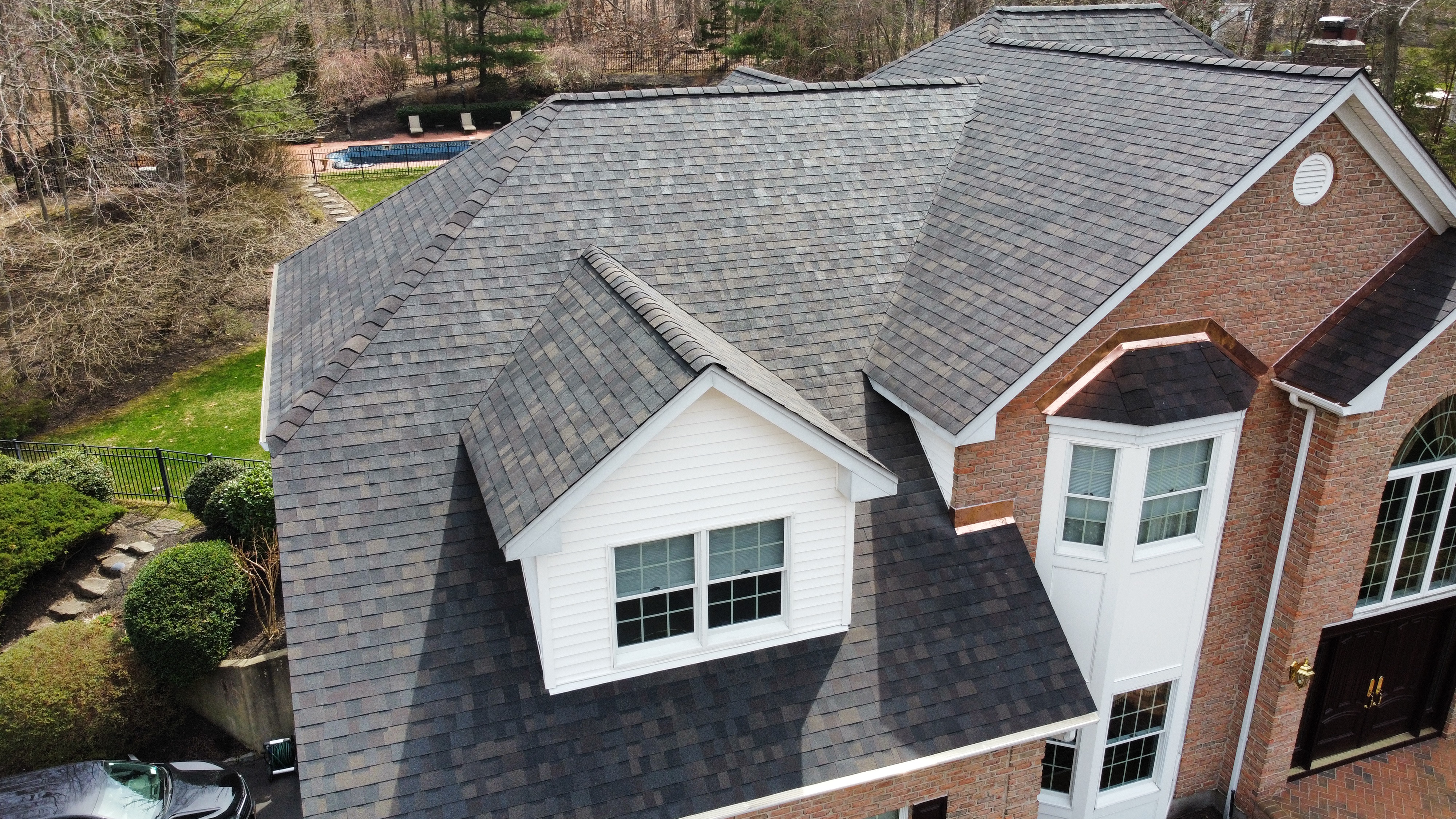
- Architectural shingles (also called dimensional or laminated) are two bonded layers. They look more textured and resist wind far better. Owens Corning's Duration line that we work with, for example, carries a 130 mph wind resistance limited warranty.
- Designer shingles are heavier still and shaped to mimic slate or cedar shake. They cost more than architectural but far less than the real materials.
For most homes here, architectural shingles are the sweet spot, but poor installation can shorten their lifespan, so choose a trusted professional for your Huntington roof replacement.
One installation detail matters as much as the asphalt shingle: the nails. Most roofing nails are electro-galvanized, with a thin zinc coating that salt-spray testing shows corrodes far faster than the thick coating on hot dipped galvanized nails. In clearer language, hot dipped galvanized nails should be your go-to choice.
Especially near the Sound, we find electro-galvanized nails rusted through after about 14 to 15 years on tear-offs, letting shingles that are still in good shape lift in the wind. That's why we use hot dipped galvanized nails on every asphalt shingle roof we install, and why it's worth asking any roofer which nails they use.
Metal Roofing
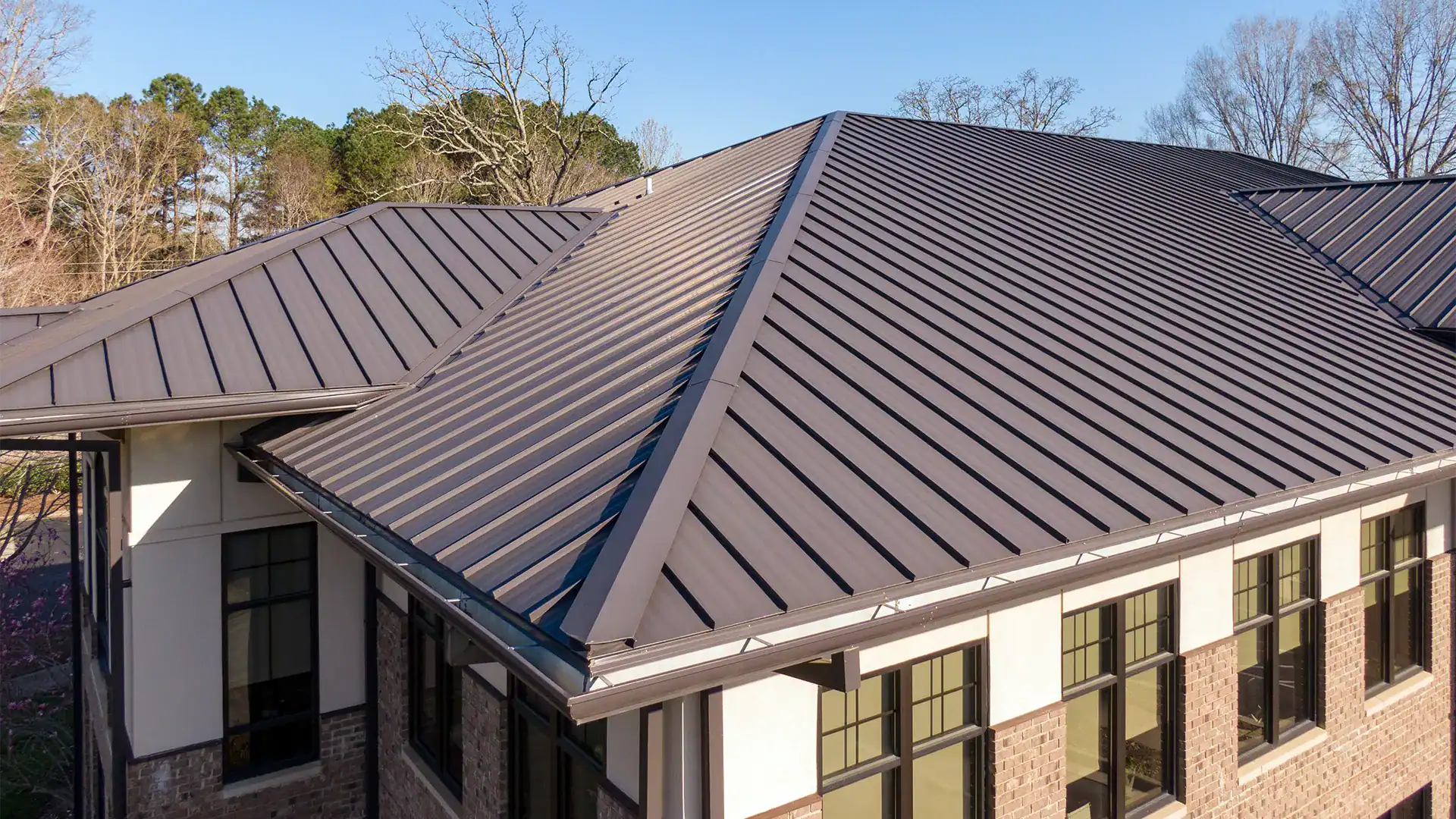
Metal roofing lasts 40 to 70 years, one of the longest lifespans of any roofing material. It sheds snow quickly, holds up well in high wind, and needs little routine maintenance.
Residential metal roofs come in two main styles:
- Standing seam uses long vertical panels joined by raised seams, with fasteners hidden underneath, leaving fewer openings for wind and water.
- Metal shingles are stamped to look like asphalt, slate, or shake, which suits traditional homes where a modern panel look would stand out.
Near the water, the type of metal matters. Aluminum doesn't rust in salt air. Coated steel costs less but can corrode at cut edges, and some manufacturers' warranties exclude homes close to salt water, so check that before you sign.
The main drawback is cost. A metal roof on a typical Huntington home runs $17,000 to $30,000 or more, with standing seam at the top of that range because it's labor-intensive to install. Prices are also less predictable right now: since April 6, 2026, federal tariffs on imported steel, aluminum, and copper apply to a product's full customs value, and the rules were revised again in June. Snow also slides off in sheets, so walkways and entrances under the roof edge may need snow guards. If you're pricing metal, ask how long the quote is valid and whether it allows for material price changes.
Slate and Synthetic Slate
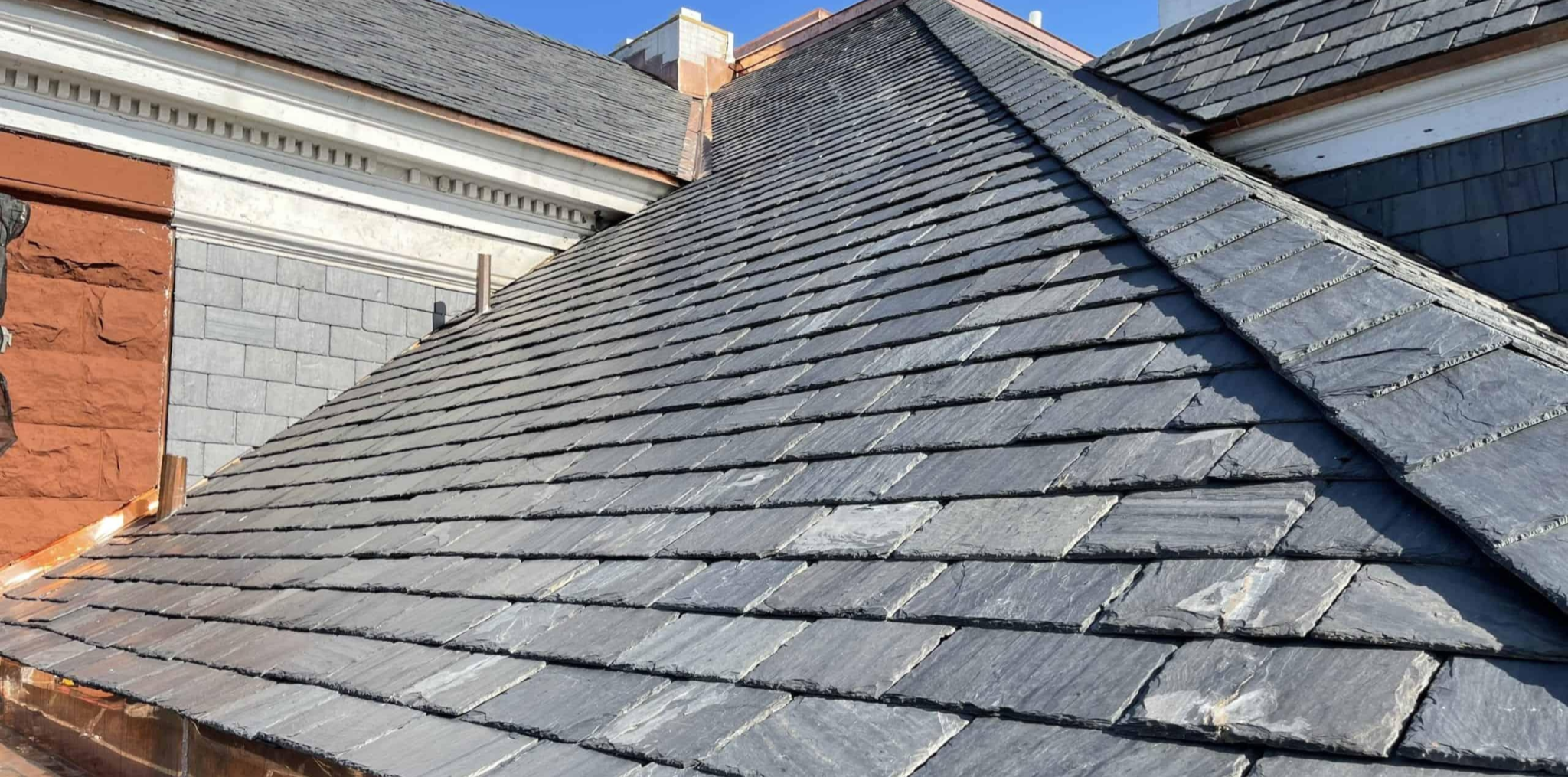
Natural slate is the longest-lasting roof you can buy, and it suits the older colonials and Victorians around Huntington Village, Cold Spring Harbor and Northport's waterfront. If your house already has a sound slate roof, repairing it is almost always smarter than replacing it with anything else.
The catch is weight. Real slate weighs about 9 pounds per square foot, roughly three times asphalt, so most homes built for shingles need a structural check, and often new framing, before switching. Repairs also need a slate specialist; a general roofer walking on slate can crack it.
Synthetic slate is made from rubber or plastic polymers molded to look like stone. It's a fraction of the weight, so it usually goes on without structural work, and it resists impact well. It hasn't been on Long Island roofs as long as real slate or asphalt, so judge it by the manufacturer's warranty and the installer's local track record.
If your home is in a historic district, check before you choose. Some exterior changes there go through the Huntington Historic Preservation Commission, and a material that changes the look of the roof can draw questions.
Cedar Shake and Tile
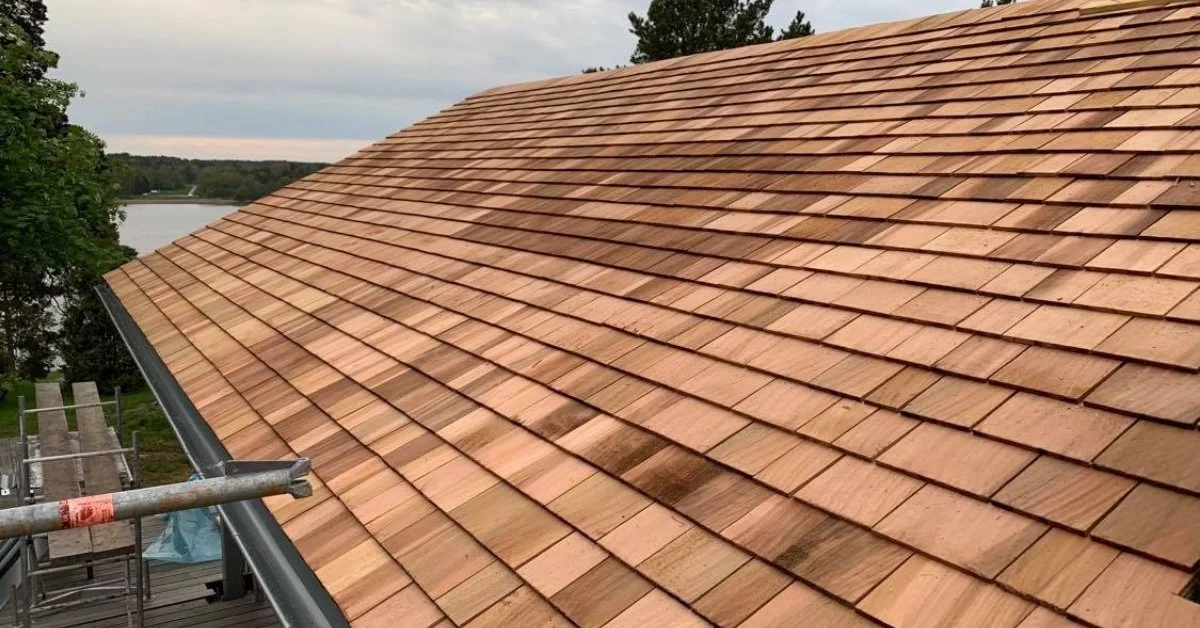
Cedar shake gives older homes a warm, natural look that weathers to silver-gray. In Huntington climate, it's also the most demanding roof to own. It soaks up moisture, and on shaded, wooded lots, common in parts of Dix Hills and Lloyd Harbor, it grows moss and algae unless it's cleaned and treated regularly.
Many older Huntington homes still have cedar shakes hidden under a later asphalt roof. We find them on tear-offs. They have to come off, and any decking that can't hold a nail gets replaced before the new roof goes on, which is worth knowing when you compare quotes.
Clay and concrete tile are rare here for good reason. Tile is heavy, most local homes weren't framed for it, and its strengths, heat and fire resistance, matter more in the Southwest than on the North Shore.
Flat and Low-Slope Sections
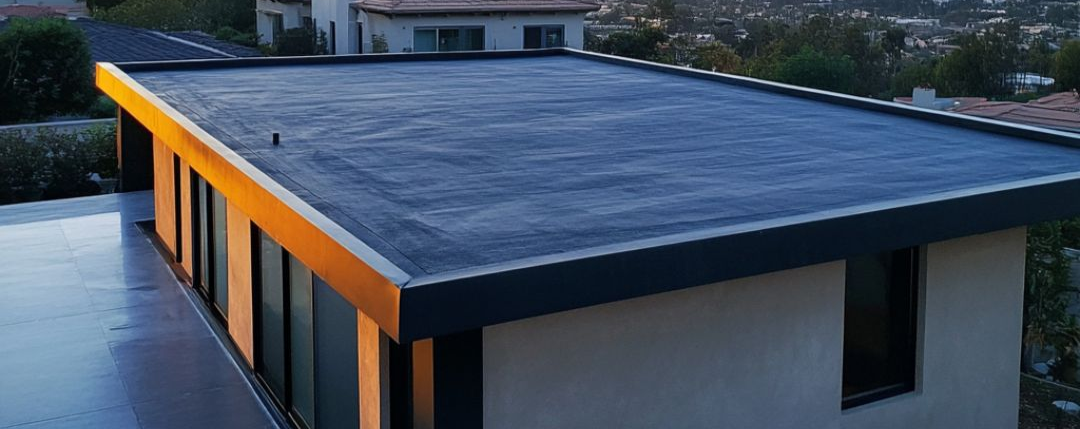
Many Huntington homes have one roof that isn't steep: a shed dormer on a cape, a porch roof, a rear extension. Shingles shed water by overlapping, so they need slope to work. The residential code allows asphalt shingles only on slopes of 2:12 or steeper (the roof rises 2 inches for every 12 inches across), with a double underlayer up to 4:12.
For flatter slopes, you need a membrane: a continuous sheet with sealed seams.
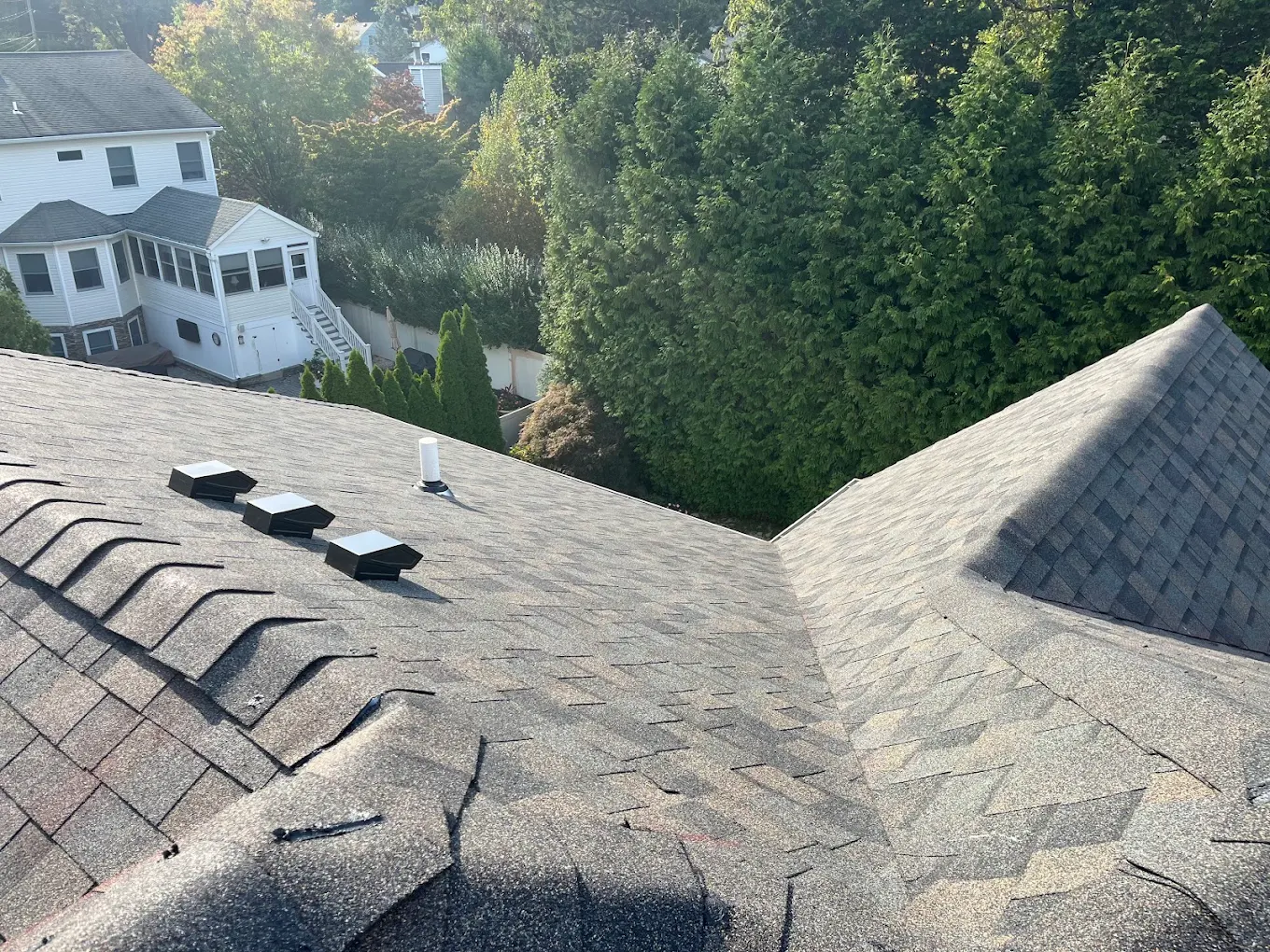
- EPDM is a black rubber sheet. Simple, proven, and easy to patch. You can see EPDM in the photo above.
- TPO is a white or light-gray plastic sheet with heat-welded seams. It reflects summer heat.
- Modified bitumen is a layered asphalt sheet, often with a granule surface. It handles foot traffic on decks and porch roofs.
If a dormer or porch roof keeps leaking no matter how often it's patched, check what's on it. Shingles laid on a nearly flat section are a common cause, and no amount of repair fixes the wrong material. Our guide to common causes of roof leaks covers the other usual suspects.
How to Choose the Right Roofing Material for Your Huntington Home
Three things settle it for most Huntington homeowners: the weather your roof faces, how long you'll stay, where the house sits, and what your insurer and today's prices mean for your budget.
Match the Material to Huntington's Weather
A roof here fails for local reasons, not national ones. Check how each option handles these four conditions.
- Nor'easter wind. Gusts lift shingle edges; September's storm brought winds over 80 mph. Architectural shingles and standing seam metal hold up when fastened properly; 3-tab and worn cedar don't.
- Salt air. Near the Sound and harbors, metal corrodes faster. Choose aluminum for metal roofs and hot dipped galvanized nails for shingles.
- Ice dams. Meltwater refreezes at the roof edge and backs up under the roofing, as many saw last winter. Every material needs ice and water shield at the edges.
- Humid summers. Moisture feeds algae streaks and rots wood on shaded lots. Ask for algae-resistant shingles, and skip cedar under heavy shade.
If you're keeping your current roof another season, our checklist on how to prepare your roof for storm season covers the basics.
Look at Your Location
- Huntington Village and Cold Spring Harbor: older colonials and Victorians, steep roofs, and historic streetscapes. Architectural or designer asphalt fits the look; slate is worth keeping where it already exists.
- Melville: larger, newer homes with big roof areas. Material differences turn into bigger dollar gaps here, so most owners we work with as roofers in Melville choose architectural asphalt and put the savings into better underlayment.
- Dix Hills: big wooded lots and complex rooflines with many valleys. Shade and leaf litter favor algae-resistant shingles and well-flashed valleys over cedar. See our notes on Dix Hills roofing.
- Northport and the harbor fronts: the most wind and salt exposure in town. Corrosion-resistant fasteners and flashing matter more here than anywhere, which is where Northport roofing jobs differ most from inland ones.
Factor in Your Insurer and Current Prices
Your roof's age now affects your homeowners policy as much as its material. Insurers increasingly use aerial imagery to judge roof age and condition, so a worn roof can be flagged without anyone visiting. Before you choose, ask your carrier whether a new roof or impact-rated shingles will change your premium or renewal terms.
Prices are moving too. Major shingle makers raised prices 5 to 8% this spring, and Long Island contractors told News 12 that putting off a project could add 10 to 15% next year. If your roof needs replacing soon anyway, waiting rarely saves money. If it only needs a fix, our guide on whether to repair or replace helps you decide.
The Bottom Line
For most Huntington homes, a well-installed architectural asphalt roof is the right balance of cost, looks, and storm resistance, while metal and slate earn their price mainly on long-term and waterfront homes. Whatever you pick, the nails, ice protection, and ventilation decide how long it really lasts.
If you're not sure what your current roof needs, a roof inspection gives you a clear starting point, or you can call us at (631) 479-3669 to see where an asphalt replacement would land for your home.