
Most roofs in Huntington, NY last 15 to 30 years. Architectural asphalt shingles, the roof on most homes here, are rated for 25 to 30 years. In practice, many Huntington roofs are replaced at 15 to 20 years. Metal lasts 40 to 70 years, cedar 20 to 30, and slate 75 to 100 or more.
The gap between the rating and reality usually isn't the shingles. It's the nails. I’ll explain it later.
I've been a roofer in Huntington, New York for over 26 years and have installed or repaired more than 2,000 roofs across the Town of Huntington. The average roof we tear off is 17 years old. So, let me show you how long yours will last, and how to tell where it stands today.
Roof Lifespan by Material in Huntington
The "rated" column is what manufacturers and national guides quote. The Huntington column is what we see on the North Shore, where salt air, nor'easters and freeze-thaw winters wear roofs down faster.
If your home has asphalt shingles, which most Huntington homes do, the single biggest variable is how the roof was installed.
Why Huntington Roofs Wear Out Early
Four local conditions decide whether your roof reaches its rating. None of them show up on the shingle wrapper.
1. Salt Air Rusts the Nails First
Huntington, Northport and Cold Spring Harbor sit a couple of miles or less from the Sound. Salt air rusts the standard electro-galvanized nails most roofers use in about 14 to 15 years. The shingles are often still fine, but the rusted nails back out, the shingles lift in the wind, and rain gets underneath.
That's why so many "30-year" roofs here are done at 17. Hot-dip galvanized nails have a much thicker zinc coating and hold up for the life of the shingle. Ask any roofer which nails they use. Most homeowners never do.
2. Nor'easters and Wind
Wind lifts shingle edges and breaks the seal strip. Once a shingle unseals, the next storm pulls it off. A six-nail pattern and a factory-sealed starter strip at the edges make a real difference here. If a big storm is coming, our guide on how to prepare your roof for storm season covers what to check.
Last weekend's storm, for example, was a real test for Huntington roofs. The National Weather Service recorded gusts over 60 mph at Eaton's Neck, and the Town's highway crews cleared about 200 fallen trees.
The wind also came from the north-northeast, which isn't our usual direction. Slopes that normally sit sheltered from the wind took the hit this time. If a shingle on that side had a weak seal, this was the storm that found it.
From the ground, look for:
- Shingles or pieces of shingle in the yard, gutters or driveway
- Lifted or bent shingle edges, especially on north- and east-facing slopes
- Missing ridge caps along the top of the roof
- Branches resting on the roof, or limbs that hit it on the way down
- New water stains on ceilings or in the attic
Don't climb up there yourself. Take dated photos of anything you find, and call your insurance company soon if you see damage.
3. Ice Dams
Snow melts on the warm part of the roof, then refreezes at the cold eaves. The ice backs water up under the shingles. New York code requires a waterproof ice and water shield running at least 2 feet past the outside wall. Many roofers install 3 feet total, which on a lot of Huntington homes with deep overhangs doesn't reach that line. We run 6 feet, and 9 on wide overhangs.
4. Attic Ventilation
A roof with no airflow underneath cooks from the back side in summer and collects moisture in winter. It never reaches its rated life. Plus, a ridge vent does nothing without intake at the soffits. Plenty of older Huntington houses have no soffit vents, or had them covered over years ago. Air has to come in low and leave high.
How Long Does Each Material Last on the North Shore
Asphalt Shingles: 15 to 30 Years
3-tab shingles are the thin, flat, older style. Expect 12 to 18 years here. They lift easily in wind, and manufacturers are phasing them out, so matching a repair gets harder every year.
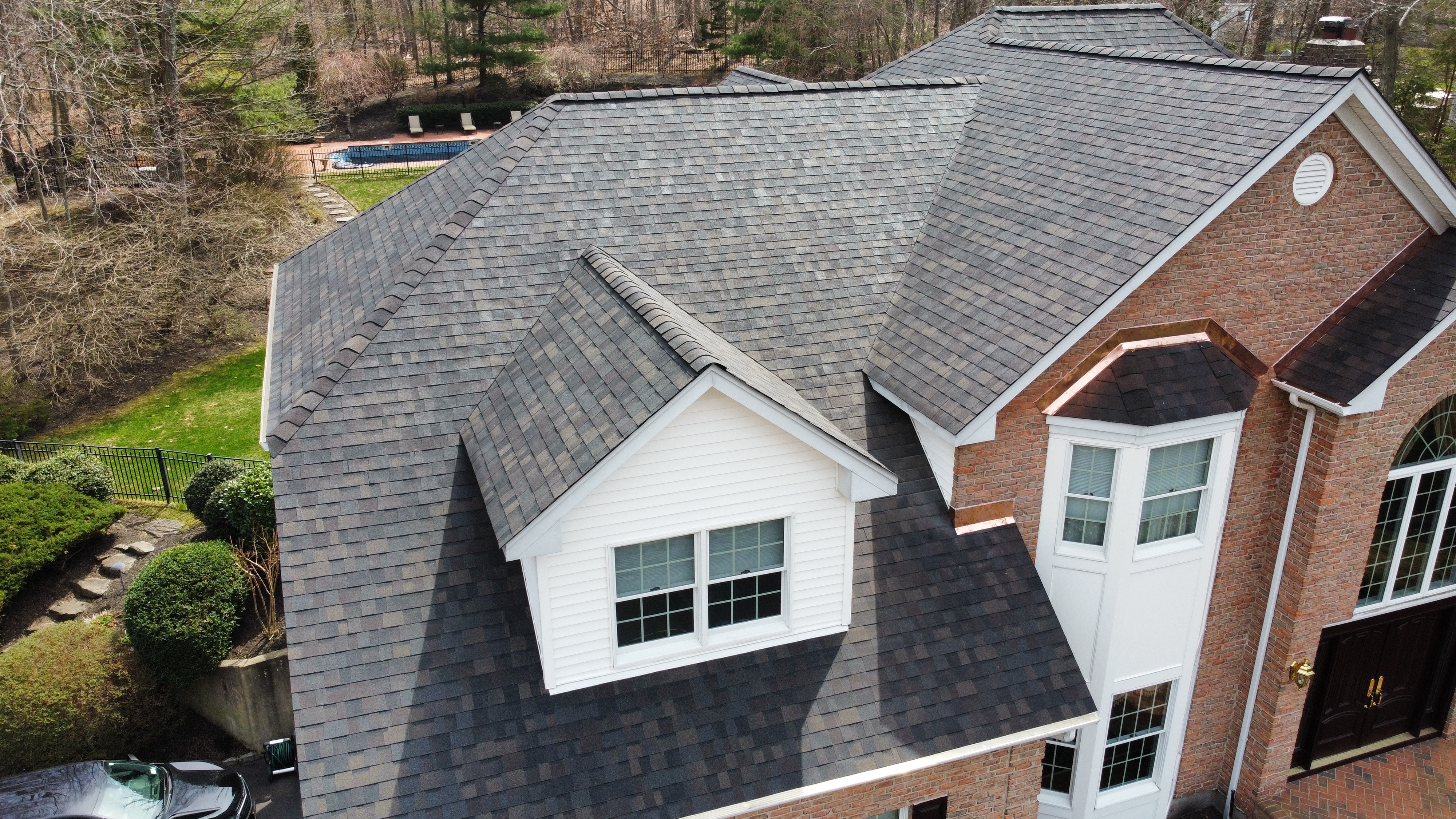
Architectural shingles are thicker and layered. They're the standard on Huntington homes today and our recommendation for almost every house. Installed with standard nails and a bare-minimum ice shield, they tend to last 15 to 20 years here. Installed with hot-dip nails, proper ventilation and full ice protection, they should reach the full 25 to 30. More on what goes into that on our asphalt shingles page.
Metal: 40 to 70 Years
Standing-seam metal handles snow and wind well. Near the water, pick aluminum or a well-coated steel with matching corrosion-resistant fasteners, or the trim and screws will fail long before the panels. The trade-off is cost: typically two to three times an asphalt roof.
Cedar Shakes and Shingles: 20 to 30 Years
Cedar looks great, but humid summers and heavy tree shade are hard on it. On north-facing slopes under mature oaks, moss and rot shorten its life fast. It needs regular cleaning and treatment to reach 30.
Slate: 75 to 100+ Years
The stone itself can outlast the house. What fails first is the flashing and the fasteners, so a 60-year-old slate roof with good slate may only need flashing work, not replacement.
Clay and Concrete Tile: Not a Good Fit Here
Tile is built for hot, dry climates. Our freeze-thaw winters crack it, and it's heavy enough to need a reinforced roof structure. You'll rarely see it on Long Island for good reason.
Flat Roofs: 15 to 25 Years
Most Huntington homes have a flat section somewhere: a porch, an addition, a dormer. EPDM rubber usually lasts longest; TPO and modified bitumen a bit less. Standing water that freezes is what kills them, so check that they drain.
What to Expect in Huntington, Melville, Dix Hills and Northport
The climate is the same across town, but the houses aren't. Here's what we run into most in each area.
Huntington and Huntington Station - Lots of older homes, many on their second or third roof. When we tear off, we often find tired plywood or old cedar shakes buried under a previous layover. Budget for a few sheets of new decking, and don't let anyone roof over the old layer.
Northport - Harbor exposure means salt air works on nails, flashing and gutters faster than inland. Older village homes also tend to have chimneys and valleys where flashing is the first thing to go, which affects how we approach Northport roofing.
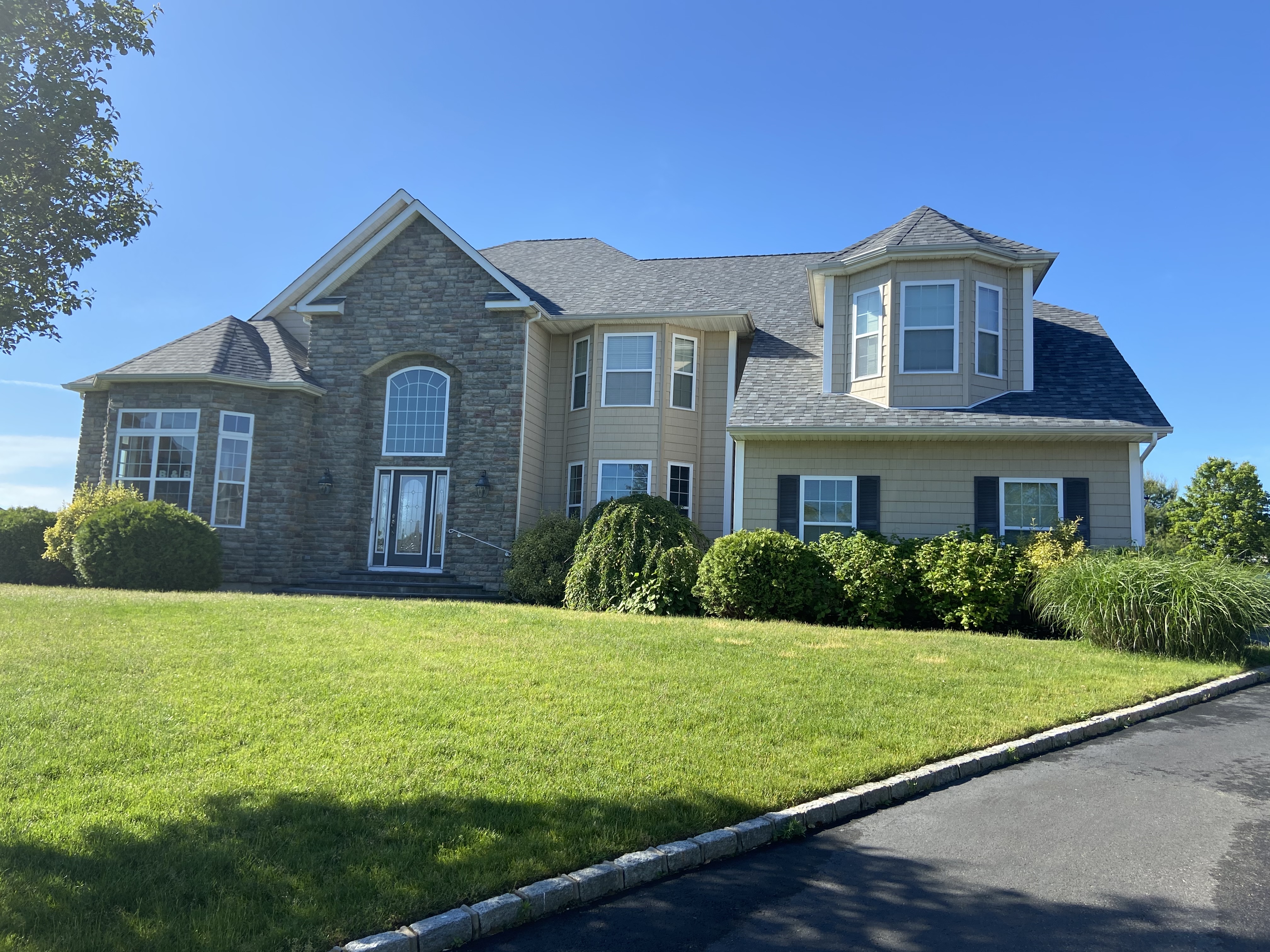
Dix Hills - Bigger homes with complex rooflines: multiple valleys, dormers and chimneys, often under heavy tree cover. Valleys and flashing fail before the open field of shingles, and shaded slopes grow moss. A large colonial here can run well above the average roof price.
Melville - Many homes were built in the same few decades, so whole streets hit replacement age together. If your neighbors are re-roofing, your roof is likely close to needing Melville roofing support too.
How to Tell How Old Your Roof Is
If you didn't put the roof on yourself, check these:
- Your home inspection report from when you bought the house. Most list the roof's estimated age.
- The seller's disclosure or any paperwork left by the previous owner.
- Leftover shingle bundles in the garage or attic. The wrapper names the product line, which dates it.
- A roofer's inspection. Nail condition, granule loss and seal strength tell us a lot. A roof inspection also gives you documentation if your insurer starts asking questions.
Signs Your Roof Is Near the End
- Shingles missing or lifted after a windstorm
- Nail heads pushing up through shingles
- Granules collecting in the gutters
- Curling or cracked shingles that crumble when lifted
- Moss growing from under the shingles, not just on top
- Water stains on ceilings, especially near exterior walls after snow (a classic ice dam sign)
- Rusted or lifting flashing around the chimney
For what causes most leaks and which ones are an easy fix, read our breakdown of the most common causes of roof leaks.
Many Long Island insurers get strict once a roof passes 15 to 20 years. Some won't write a new policy. Others renew you but switch the roof to actual cash value (ACV).
Replacement cost pays for a new roof, minus your deductible. ACV pays only what your old roof was worth after age. In New York's own example, a 15-year-old roof expected to last 25 years is worth $2,000 against a $5,000 repair.
The insurer assumes 25 years. In Huntington, salt air and standard nails often finish a roof at 17. By the time it fails, the policy may treat it as nearly worthless. And insurance covers storm damage, not wear. A roof with rusted nails makes that an easy call for the adjuster.
Check your declarations page for "actual cash value." If your roof is past 15, talk to your agent before renewal. A dated roof inspection report gives you proof of its age and condition.
How to Make Your Roof Last Longer
If you're getting a new roof, these decide whether it lasts 17 years or 30. Ask your roofer about each one:
- Hot-dip galvanized nails, six per shingle. Not electro-galvanized.
- Ice and water shield at least 6 feet up from the gutters, not 3.
- Working ventilation: soffit intake plus ridge exhaust, not a ridge vent alone.
- Full tear-off. New York allows two layers, but covering old shingles hides rotted plywood.
- Copper chimney flashing and a factory-sealed starter strip at the edges.
If you already have a roof you want to keep going:
- Get it inspected every year or two after year 12, and after any major storm. Regular inspections save you money by catching lifted shingles and failing flashing early.
- Keep gutters clear, especially after the fall leaf drop. Clogged gutters feed ice dams. Gutter guards cut down on that work.
- Trim branches back from the roof.
- Never pressure-wash shingles. It strips the granules that protect them.
Find Out How Many Years Your Roof Has Left
The number on the shingle wrapper won't tell you how long your roof has. The nails, flashing and ventilation will, and you can't see those from the driveway.
We’ll come out, check the roof, and tell you straight whether it needs a repair, a replacement, or nothing yet. See what Huntington homeowners say about working with us, or get in touch directly to see where your roof stands. You can also call me directly at (631) 479-3669.
Michael Falco, Owner, Smart Choice Contracting. Owens Corning Platinum Preferred. Licensed in Suffolk (#HI-62204) and Nassau (#189141).
Frequently Asked Questions
Is a 20-Year-Old Roof in Huntington Due for Replacement?
Often, yes. The average roof we replace is 17 years old. At 20, have it inspected even if it isn't leaking, and start planning. It's cheaper to replace on your schedule than after a storm.
How Long Does a Metal Roof Last Near the Water?
40 to 60 years on the North Shore, if you choose aluminum or well-coated steel with matching fasteners. Cheap exposed-fastener systems near the water fail much sooner.
Does a 50-Year Shingle Warranty Mean My Roof Lasts 50 Years?
No. A standard warranty covers manufacturing defects and is usually prorated after the first 10 years. It doesn't cover installation mistakes or rusted nails. Some upgraded warranties cover workmanship too, backed by the manufacturer rather than the roofer.
Can I Put a New Roof Over My Old Shingles in Huntington?
New York allows up to two layers over adequate sheathing, but we don't recommend it. A layover hides rotted plywood, adds weight and shortens the new roof's life.
How Much Does a New Roof Cost in Huntington?
A typical 2,000 sq ft home runs $11,000 to $13,000 for a full asphalt tear-off and replacement. Large or complex roofs cost more. Our financing options include 0% for five years for qualified homeowners.