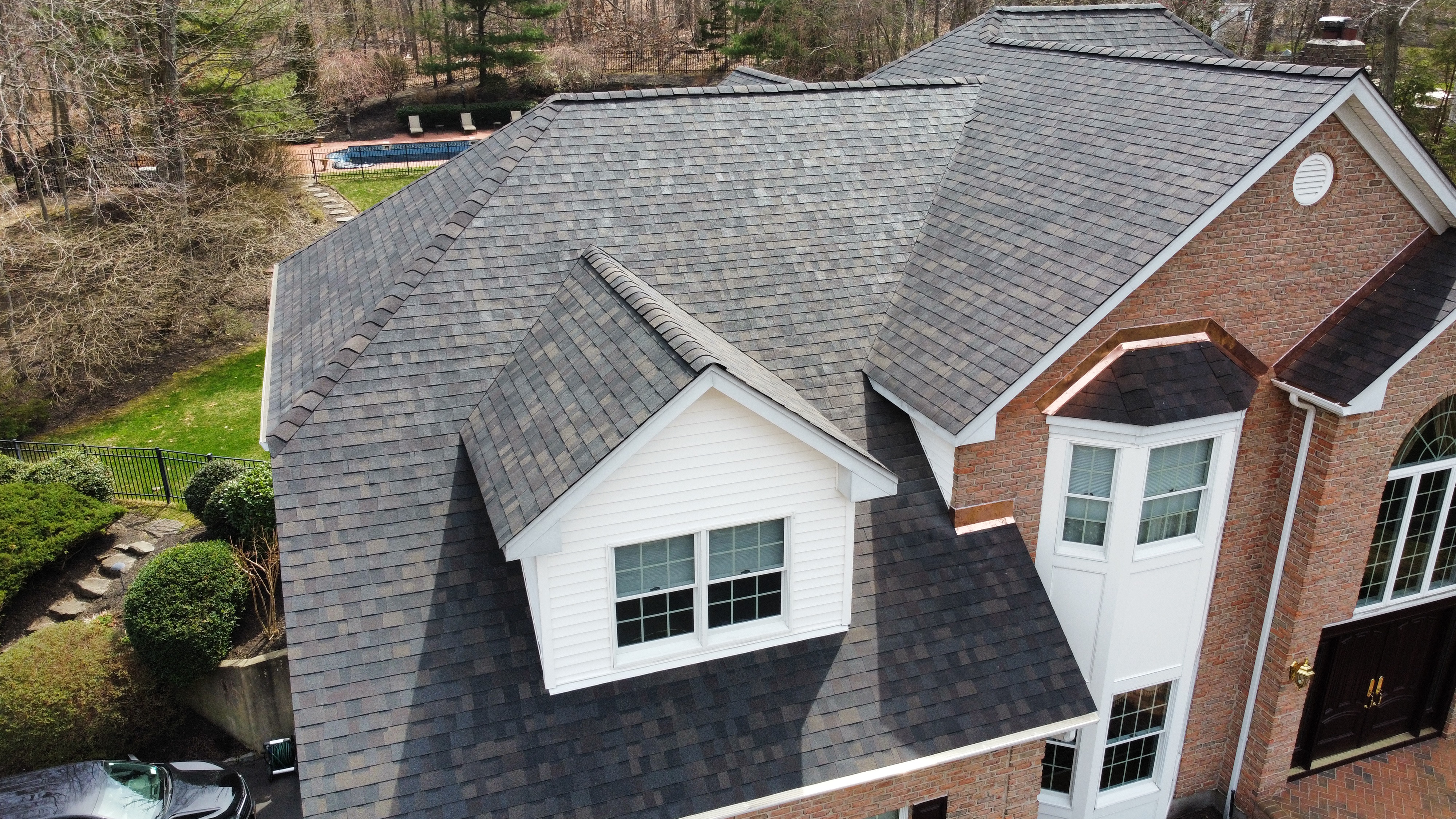

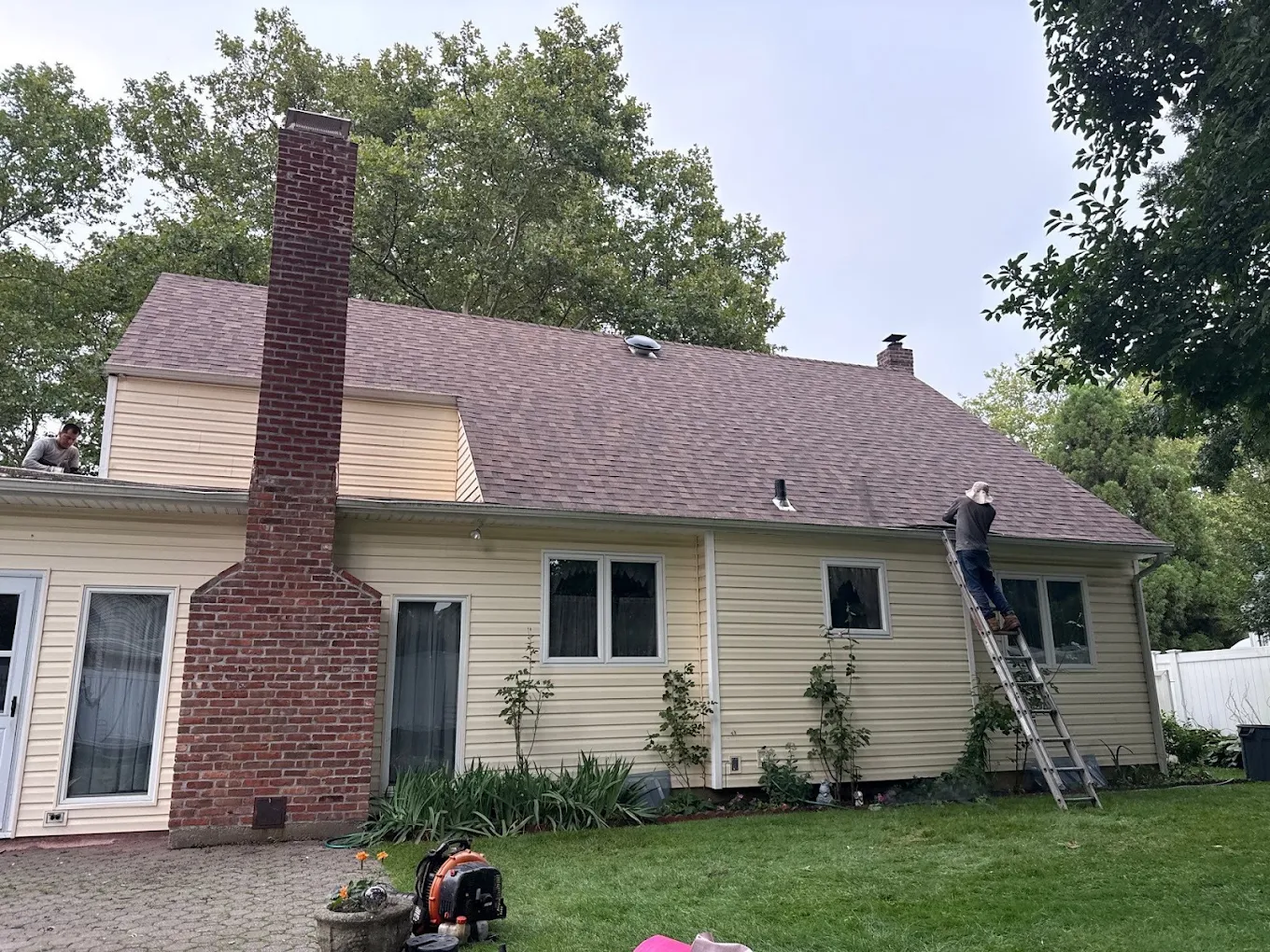
Most roof leaks in Huntington, NY, start around damaged flashing, loose or missing shingles, cracked pipe boots, clogged gutters, or aging roofing materials. Wind-driven rain and coastal conditions can make these problems worse, allowing water to enter even when the roof looks fine from the ground.
I'm Michael Falco, and I've been repairing and replacing roofs around Huntington for over 26 years. One thing I've learned is that where you see water inside your home isn't always where the leak starts. Water can travel along roof decking and rafters before reaching your ceiling.
In this guide, I'll walk you through the 12 most common causes of roof leaks, how to recognize the warning signs, and when a repair is enough versus when you might need a replacement.
Before you start: Stay off a wet roof. You can identify many warning signs safely from inside your home or from the ground.
Where Is the Water Showing Up?
The spot on your ceiling is the end of the trail. Water usually lands on the roof deck, runs down a rafter, and drips wherever it finds a low point. So the real entry point is almost always higher up the roof than the stain. Still, the location narrows things down fast.
If you can safely get into your attic, take a flashlight and look at the underside of the roof boards above the stain. Follow the dark streaks uphill to the highest wet point. That's what your roofer needs to know.
When Does It Leak?
This is the first question I ask every homeowner, because the timing often tells me more than the stain does.
That "only sometimes" leak is the one that drives people crazy, and on Long Island it's usually the wind. A northeast storm pushes water sideways into seams that stay bone dry in a straight-down rain. If your leak lines up with certain storms and not others, write down the dates. It saves a lot of guessing.
Why Huntington Roofs Leak Where They Do
Four local things shape almost every leak I see in Huntington:
- The Sound. Huntington Bay, Halesite, Northport, Eaton's Neck, Lloyd Harbor, and Cold Spring Harbor all sit within a mile or two of salt water. Salt air is hard on metal: nails, flashing, drip edge.
- Nor'easter season is long. FOX Weather's forecast center counts it as roughly September through April. That's eight months of wind-driven rain on the same weak spots.
- Older homes. Around Huntington Village and old Northport, many houses have masonry chimneys, flashing patched with tar more than once, and sometimes old cedar shakes or a second layer of shingles hidden under the current roof. We find this regularly when we tear off.
- Big trees. Dix Hills and parts of Melville have heavily wooded lots. Oak leaves and pine needles quickly fill gutters and valleys, and limbs come down in storms. During the September nor'easter, about 200 trees came down in the Town of Huntington alone, according to the town's Highway Superintendent.
So a waterfront house in Northport and a wooded lot in Dix Hills can leak for completely different reasons. Near the water, we look at nails and metal first. Inland, under the trees, we first check gutters, valleys, and limb damage. If you're looking for Northport roofing help or roofers in Melville, that difference matters when someone diagnoses your leak.
The 12 Most Common Causes of Roof Leaks in Huntington
These are in the order I actually run into them around town, not the order you'll see on a national list.
1. Chimney Flashing
Flashing is the metal that seals the joint where your roof meets the chimney. On a chimney, it comes in two parts: step flashing tucked under each row of shingles, and counter flashing set into the brick that laps over it. When either one fails, water runs down the face of the chimney and into your house.
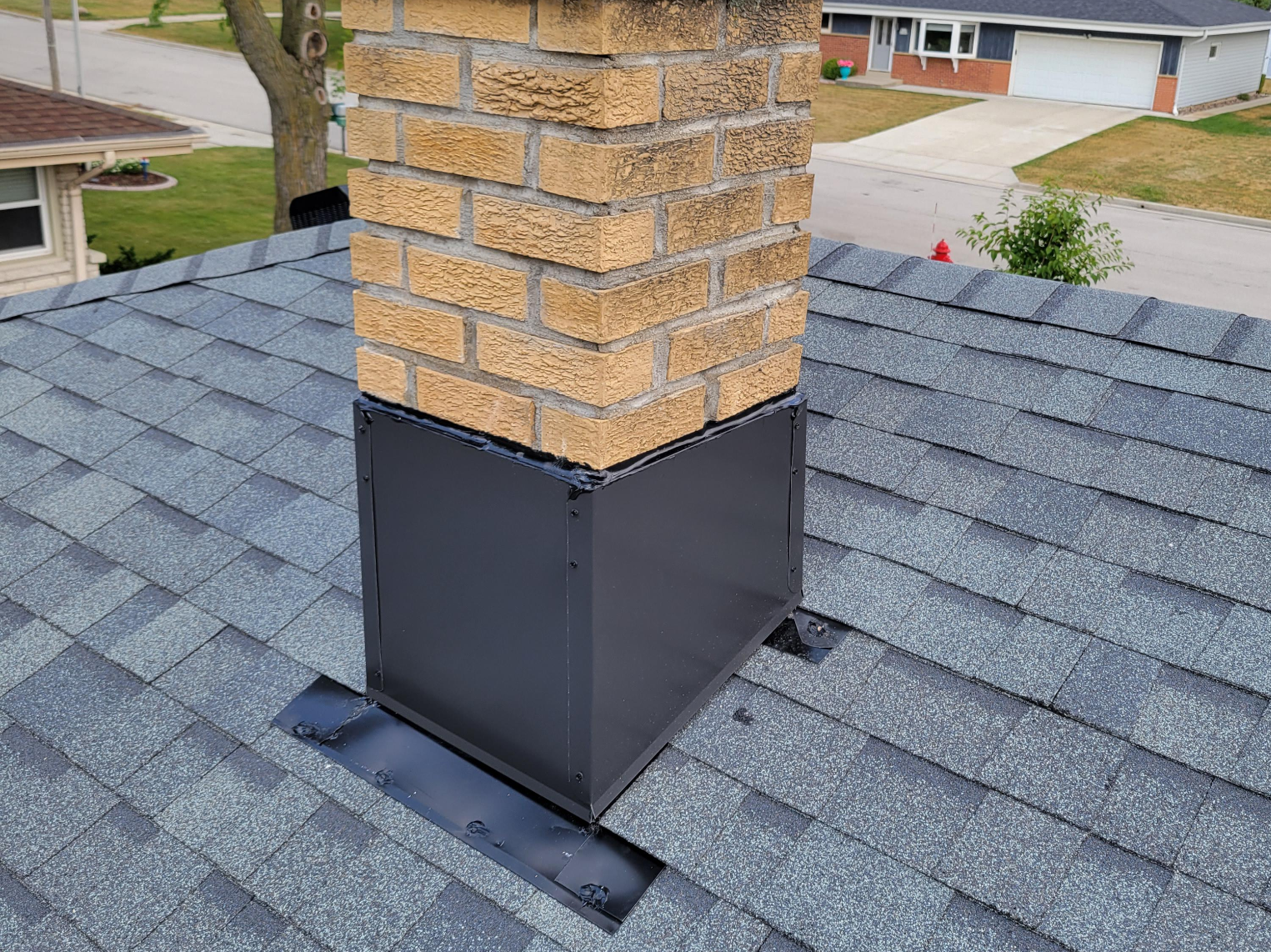
This is the most common leak I see in Huntington, especially on older homes in and around the Village.
The usual story is that at some point, someone "fixed" the flashing by smearing roofing tar over it. Tar dries out, cracks, and pulls away from the brick within a few seasons, and the leak comes back.
What you'll notice: stains on the ceiling or wall next to the fireplace, damp brick inside, or a musty smell in that room after rain.
The fix: New step and counter flashing, properly cut into the mortar joints, not more tar. On wider chimneys, there should also be a cricket, a small peaked section built behind the chimney that splits water around it instead of letting it pool against the brick. We use copper flashing on masonry chimneys because it outlasts aluminum, and we add a cricket wherever one is needed.
2. Wind-Driven Rain and Lifted Shingles
Every asphalt shingle has a strip of adhesive that bonds it to the shingle below once the sun warms it up. Strong wind can break that bond without tearing the shingle off. From the ground, the roof looks perfect. But the next time rain comes in sideways, it gets pushed up under the loose shingle.
The September nor'easter is a good example. The National Weather Service recorded gusts above 60 mph in Eaton's Neck, and the wind came from the north-northeast, which isn't the side most roofs here take their weather on. If you've had a leak appear in October that you never had before, this is high on my list.f
What you'll notice: A leak that only shows up in certain storms, often near an outside wall or under the ridge on the side facing the wind.
The fix: Reseal or replace the lifted shingles. On a new roof, the edges matter most: factory-sealed starter shingles along the eaves and rakes, and enough nails in each shingle. We use six per shingle.
3. Rusted Nails Backing Out (Salt Air)
Most roofers use electro-galvanized nails. They have a thin zinc coating. Within a couple of miles of the Sound, we see that coating give out and the nails rust through in about 14 to 15 years. A rusted nail loses its grip, backs out, and the shingle above it lifts. Water gets under it. The shingles themselves often still have plenty of life left. It's the nails that quit.
What you'll notice: Small bumps in the shingles where nails are pushing up (nail pops), rust streaks below shingle edges, or rusty nail tips poking through the roof boards when you look up from the attic.
The fix: Hot-dipped galvanized nails. They're dipped in molten zinc, so the coating is much thicker than on electro-galvanized nails, and they stand up to salt air for the life of the roof. We use hot-dipped galvanized nails on every roof we install for exactly this reason. Whoever you hire, ask which nails they use and get it in writing. It's one of the cheapest upgrades on a roof and one of the most important ones near the water.
4. Cracked Pipe Boots
A pipe boot is the rubber collar that seals around the plumbing vent pipe sticking out of your roof.
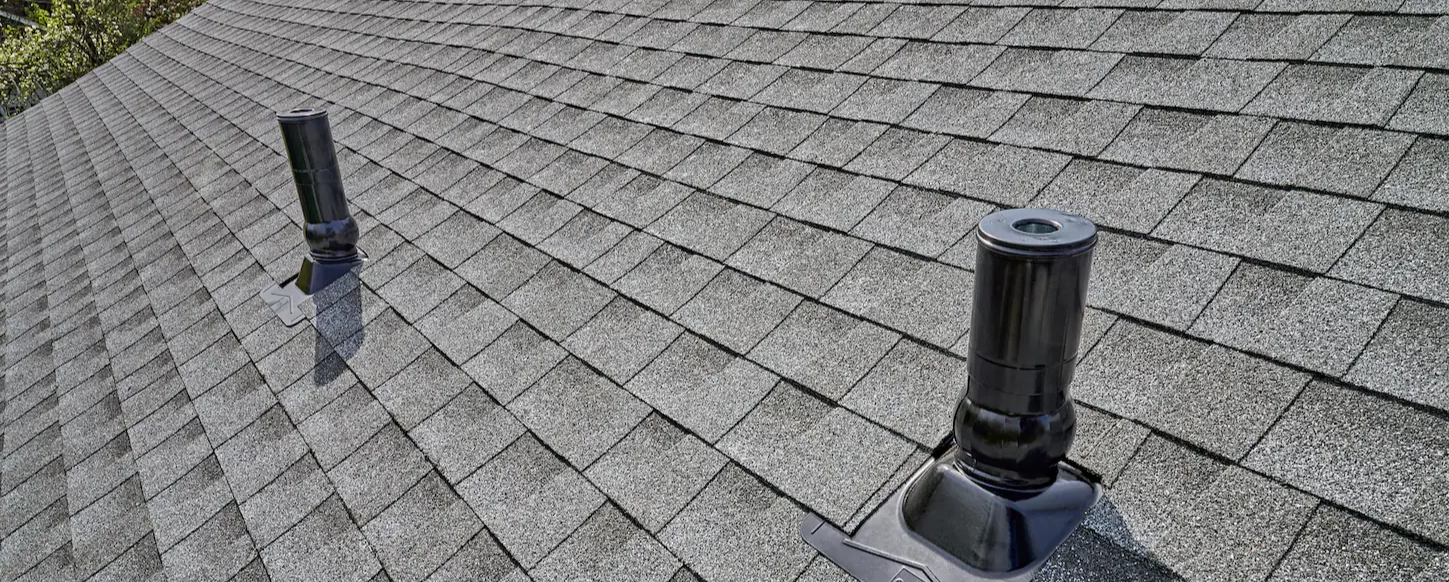
Years of sun dry out the rubber until it cracks, and then rain runs straight down the outside of the pipe into your ceiling. In our experience, that usually starts somewhere after the 10-year mark.
What you'll notice: A small, round stain in the middle of a ceiling, usually in a room under a bathroom or near the kitchen.
The fix: A new boot. It's one of the cheapest leaks to fix and one of the most commonly missed ones.
5. Valleys and Pitch Transitions
A valley is where two roof slopes meet and form a channel. A pitch transition is where the roof changes steepness, like where a dormer ties in. Both carry far more water than the rest of the roof.
The most common mistake I find is nails placed too close to the center of the valley. In a heavy rain, water backs up over those nail holes and finds its way in. Dormers, which are common on Long Island capes, add more transitions and more chances for this.
What you'll notice: Atains below a valley or next to a dormer, mostly during heavy rain.
The fix: Re-laying the valley correctly, with a waterproof membrane underneath and no nails in the water path.
6. Clogged Gutters and Overflow at the Roof Edge
When gutters fill with leaves, water can't drain. It backs up over the edge of the roof and soaks the wood behind the gutter and under the first rows of shingles. Under the big oaks in Dix Hills and Melville, this can happen well before the end of the fall.
What you'll notice: Water staining along the top of an outside wall, peeling paint on the fascia board behind the gutter, or gutters spilling over in a moderate rain.
The fix: Clean the gutters and check the roof edge for rot. Two things on the roof itself help a lot: a drip edge (a metal strip that guides water off the edge and into the gutter) and ice and water shield (a waterproof sheet under the first few feet of shingles). If cleaning gutters every few weeks in the fall isn't realistic, gutter guards are worth a look.
7. Skylights
Skylights leak in two ways: the flashing around the frame fails, or the seal around the glass breaks down. Water can also run down the skylight shaft and show up a few feet away, so the skylight isn't always obvious as the source.
What you'll notice: Stains on the drywall of the shaft, drips at the frame corners, or moisture trapped between the panes.
The fix: New flashing around the frame, or a new unit if the glass seal has failed. If you're replacing the roof and the skylight is over 15 to 20 years old, replace it at the same time.
8. An Aging Roof
Asphalt shingles get brittle with age and lose their granules, the gritty coating that protects them from the sun. Once that happens, they crack, curl, and stop shedding water well.
A recent 2026 roof report estimates that about 29% of U.S. homes with asphalt shingles have less than four years of useful roof life left. Yours might be on the list as well.
What you'll notice: Granules collecting in the gutters, curled or cracked shingles, and new leaks in several places at once.
The fix: A single repair might buy time, but when leaks start popping up in different spots on an old roof, you're usually patching a roof that's done.
9. Ice Dams
When heat escapes into the attic, it melts snow on the upper roof. The water runs down to the cold edge over the gutters and refreezes into a ridge of ice. More meltwater backs up behind it and gets pushed under the shingles.
What you'll notice: Big icicles at the gutters, and leaks along outside walls during or right after a snowy stretch.
The fix: Better attic insulation and ventilation to stop the melting, plus ice and water shield along the eaves on the next roof. We run six feet of it along the gutter line, and up to nine feet on homes with wider overhangs.
10. Low-Slope Sections Covered with Shingles
Shingles shed water, but they don't seal it out. That works on a normal pitched roof, but not on nearly flat areas like porch roofs or the back of some dormers. The Asphalt Roofing Manufacturers Association (ARMA) says shingles should never go on a roof flatter than 2 inches of rise per foot, and that lower slopes are more prone to wind-driven rain getting in.
What you'll notice: Leaks under a porch roof or a flat-ish dormer, mostly in heavy or wind-driven rain.
The fix: A proper low-slope membrane on that section. Asphalt shingles are still the right call for the main roof. They're just the wrong product for a nearly flat one.
11. Installation Mistakes (When a Newer Roof Leaks)
If your roof is under 10 years old and leaking, it's almost always an installation error, like a flashing that was reused or skipped, nails in the wrong spot, no ice and water shield, or a mix of parts from different manufacturers that were never meant to work together.
What you'll notice: A leak in the first few years, often at a chimney, wall, or valley.
The fix: Call the installer first, since workmanship should be under their warranty. If they're gone or won't come back, get an independent roof inspection so you know exactly what was done wrong.
12. Not a Leak At All: Attic Condensation
Every fall I get calls about "leaks" that turn out to be condensation. Warm, moist air from the house rises into a cold attic, hits the underside of the roof and turns to water, just like a cold glass on a summer day. It drips, it stains, and it looks exactly like a leak.
This is the time of year it starts. The first real cold snap arrived October 17, with highs stuck in the low 50s, and it only gets more common from here.
What you'll notice: Frost or water droplets on the nail tips in the attic, damp insulation spread across a wide area, and drips on cold mornings even when it hasn't rained.
The fix: Ventilation and air sealing, not shingles. The attic needs air coming in low at the soffits and going out high at the ridge, and gaps from the house into the attic (bath fans, light fixtures, the attic hatch) should be sealed. If a roofer wants to replace shingles to fix this, get a second opinion.
Does a Leak Mean You Need a New Roof?
Usually not. Most leaks I'm called for are one bad spot on a roof that's otherwise fine, and a roof repair is the right answer. Three questions tell you which side you're on:
- Is it one spot or several? One leak at a chimney or pipe boot is a repair. Leaks in three rooms usually aren't.
- How old is the roof? Past about 20 years, with granule loss and curling, a repair often just moves the leak somewhere else.
- Are the nails rusting across the whole roof? Near the water, if the nails are going everywhere, you can't fix that one shingle at a time.
If two of those point to replacement, it's time to price a roof replacement. I go through this decision in more detail in our guide on roofing repair or replacement.
What to Do While You Wait For a Roofer
- Catch the water. Bucket under the drip, towels around it, and move anything valuable out of the way.
- Take photos. The stain, the attic if you can get there safely, and the outside of the roof from the ground. Date them. Your insurance company and your roofer will both want them.
- Don't poke a sagging ceiling. If drywall is bulging with water, it can come down all at once. Keep people out from under it and let a pro deal with it.
- Stay off the roof. Wet shingles are slick, and most leaks can be found from the attic anyway.
- Note when it leaks. Which storm, which wind direction, heavy rain or light. That list is worth more to your roofer than a guess at the cause.
If you want to get ahead of the next storm instead of reacting to it, I put together a checklist on how to prepare your roof for storm season.
How Do We Build Asphalt Roofs So They Don't Leak
We only install asphalt shingles, and that's a deliberate choice. Look back at the 12 causes above. Almost none of them are about the shingle itself. They're about the details: flashing, nails, edges, valleys, ventilation. A well-built asphalt roof handles Huntington weather well; it's affordable, and when something does go wrong, it's a simple local repair.
So whoever you hire, these are the details I'd ask about, in writing:
- Nails: Hot-dipped galvanized nails, six per shingle. Near the water, this matters more than the shingle brand.
- Ice and water shield: at least six feet up from the gutter line, more on wide overhangs.
- Chimney flashing: new step and counter flashing, not reused or tarred. We use copper on masonry chimneys.
- Crickets: behind any chimney wide enough to hold water.
- Ventilation: air in at the soffits, air out at the ridge. Without it, you get condensation in the attic and shingles that age early.
- Starter shingles: factory-sealed along the edges, where wind gets under first.
- One system: leak barrier, underlayment, shingles, vents, and ridge cap from one manufacturer, so the warranty actually covers the whole roof.
None of this is exotic. It's just what keeps the leaks in this article from happening. If you want to see how it holds up, our reviews are from homeowners around Huntington, Northport, Melville, and Dix Hills.
When Should I Fix a Roof Leak? As Soon As You Find It
The right time to fix a roof leak is as soon as you notice it, whatever the month. A leak never fixes itself. Every rain or snowmelt pushes more water into the insulation, the drywall, and the roof boards, and that's where a small repair turns into a big one.
If you're reading this in the fall, you're in the best position. Repairs go quickly in mild weather, new shingles seal down on their own while the sun still has some warmth, and you get ahead of winter. NOAA's 2026-2027 outlook calls for a very strong El Niño and wetter-than-average conditions along the East Coast from December through February.
If you're reading this in December, January, or even later, you're not too late. We fix roofs on Long Island all winter. A good crew works on dry days, and when it's too cold for new shingles to seal by themselves, they hand-seal them so they hold until spring warms them up.
If your roof is leaking and you want a certified roofer in Huntington, New York, call me at (631) 479-3669. I'll come out myself, find where the water is getting in, and tell you straight whether it needs a repair or something more.
Frequently Asked Questions
Will homeowners insurance cover my roof leak in New York?
It depends on what caused it. Sudden damage from wind or a falling limb is often covered. Slow leaks from age and wear usually aren't. Flood damage is not covered by a standard homeowners policy at all, according to the New York State Department of Financial Services. Check your own policy and deductible before you file.
Should I call my insurance company or a roofer first?
Call the roofer first unless the damage is obviously major, like a tree through the roof. A roofer can tell you whether it's storm damage or wear, and that answer decides whether a claim makes sense. Filing a claim for something that turns out to be wear can still go on your record.
Can I patch the leak myself with caulk or sealant until a roofer comes?
Inside, a bucket and towels are the right temporary fix. Outside, I'd skip it. Sealant smeared on a wet roof rarely holds, and it can cover up the exact spot a roofer needs to see. If water is pouring in, a roofer can put on an emergency tarp safely.
Water is coming in around a window. Is that my roof?
Not always. Water near the top of a window is often a siding or window flashing problem, or a gutter spilling over and running down the wall. A good roofer will check the roof edge and gutters first, then the wall. If it turns out to be the wall, that's a siding repair or replacement question, not a roof one.
How fast can a roof leak cause mold?
Faster than most people think. The EPA's guidance is to dry water-damaged materials within 24 to 48 hours to prevent mold growth. Wet attic insulation holds moisture against the wood for a long time, so get it checked even after the drip stops.
Can a roofer find a leak when it isn't raining?
Yes. Old water leaves a trail: dark streaks on the roof boards, stained insulation, rusty nail tips. A roofer can also run a controlled hose test, wetting one section of the roof at a time while someone watches inside, to pin down the exact spot.
My ceiling dripped in July, and it hadn't rained. What was that?
Often it's not the roof. Central air units in the attic produce a lot of water, and a clogged condensate line or a rusted drain pan will drip through the ceiling on hot days. Check the air handler before you call a roofer.
Do metal roofs leak less than asphalt shingles?
Not really. Metal roofs leak too, mostly at seams, screws, and flashing. Whether a roof leaks comes down to how it's installed far more than what it's made of. For most Huntington homes, a well-installed asphalt roof gives you the best mix of cost, looks, and easy repairs.