
A professional roof inspection has four parts. There's a short conversation, a walk-around from the ground, a hands-on check of the roof surface, and a look inside your attic. It usually takes about two to three hours. When it's done, you get a straight answer: your roof is fine, it needs a repair, or it's time to plan a replacement.
We offer two types of inspection. A residential roof inspection is for roofs 17 years or older. A roof damage inspection is for roofs hit by a storm, a fallen tree, or a large leak.
Here's the visit, step by step:
- A quick talk about your roof's age, past repairs, and any leaks
- A walk-around of the house from the ground
- A close look on the roof at shingles, nails, flashing, vents, old repairs, and gutters
- An attic check for moisture, leaks, and ventilation problems
- A clear recommendation, with an itemized estimate if work is needed
The late-September storm brought a State of Emergency for Long Island. The National Weather Service forecast gusts of 45 to 55 mph, locally up to 65 mph, while trees were still in full leaf. Wind damage like broken shingle seals rarely shows from the driveway. If big limbs came down on or near your house, it's worth having the roof checked before winter.
Before Roofer’s Arrival: What to Have Ready
We will start by asking a few questions:
- How old is the roof?
- Has it been repaired, and by whom?
- Have you seen stains on a ceiling?
- Did anything hit the house in the last storm?
Your answers tell us where to look first. To help the visit go quickly:
- Have old invoices, warranty papers, and any letter from your insurance company handy.
- Take photos of a leak while it's happening, if you can.
- Clear the path to your attic hatch.
- Move cars away from the side of the house where the ladder goes.
You don't need to be on the roof with the roofer. It helps if you're home for the attic portion and the conversation at the end.
Step 1: The Walk-Around From the Ground
Before the roofer climbs anything, they will walk the whole house to look at:
- The rooflines. Is the ridge straight, or are any planes sagging?
- Missing or lifted shingles, and shingle pieces in the yard.
- Granules at the bottom of downspouts, which can signal aging shingles.
- Gutters, fascia, and siding. Sagging gutters and water-stained siding often point to a roof drainage problem.
- Trees over the roof. We see this constantly doing roofing in Dix Hills. On wooded lots, overhanging limbs cause a lot of the damage after wind storms.
Step 2: On the Roof: What Is Checked
The roofer gets on the roof whenever the pitch and weather allow, because some problems can only be found by hand. A soft spot in the decking or a shingle that has lost its seal can look fine from a distance. You only find them up close.
On older roofs, we will also note installation problems, like nails placed too high, missing drip edge, or patches nailed through the face of the shingle. These can explain why a roof is wearing out early. Our guide to common causes of roof leaks goes deeper on the usual suspects.
If another roofer recently repaired or replaced your roof, call the contractor who did it, since it should still be under their warranty.
Will You Walk on the Roof or Use a Drone?
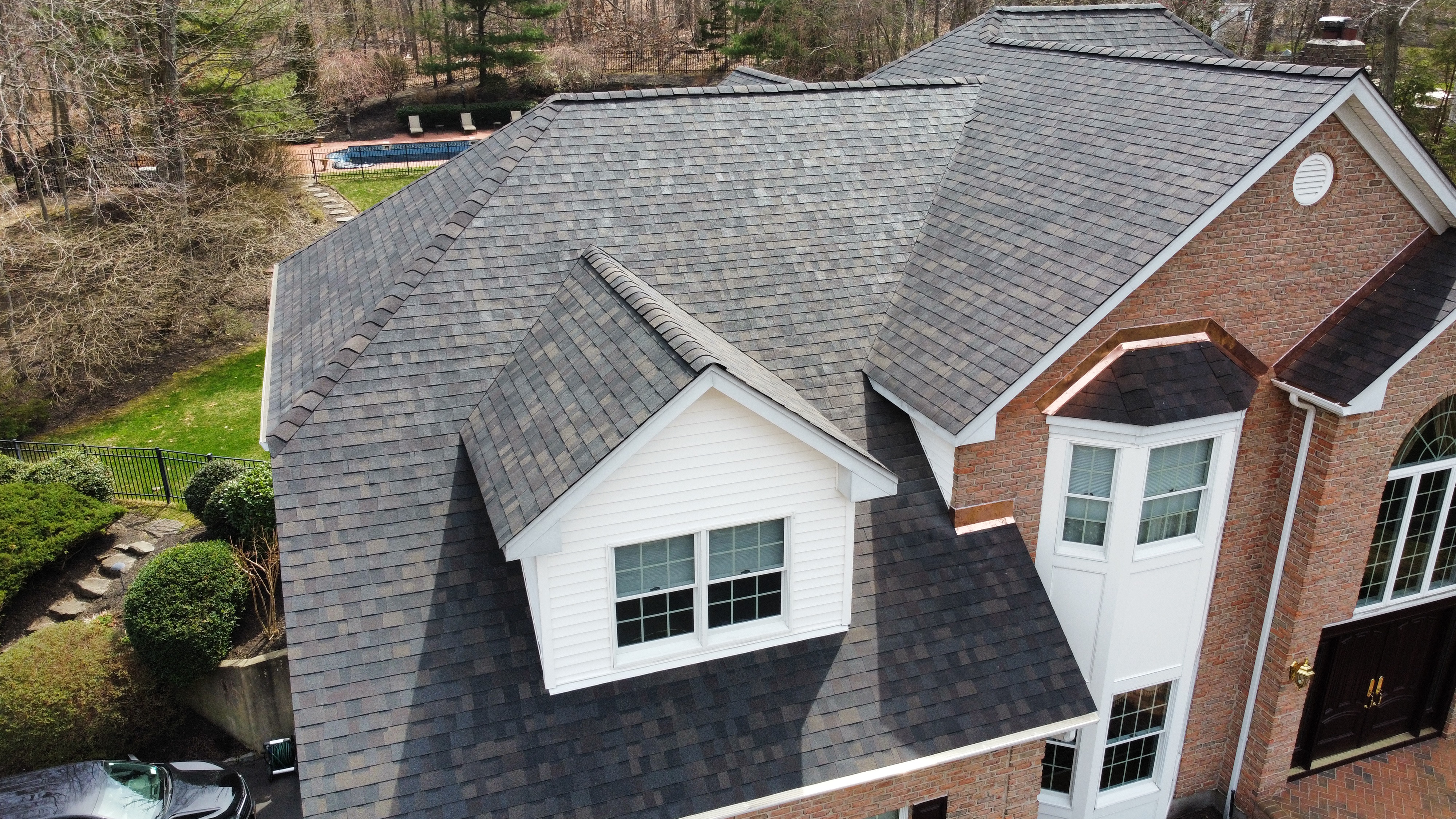
We inspect the roof surface in person and also use drones as needed. Drones take useful pictures, but they can't find a soft spot in the decking or test whether a shingle is still sealed. If the roof is wet, icy, or too steep to walk safely, we'll inspect what we can and reschedule the rest.
Step 3: Inside the Attic
Your attic shows problems the roof hides. When the attic is accessible, roofers look for:
- Water stains or dark spots on the underside of the roof boards
- Moisture or rot in the wood
- Damp or flattened insulation
- Rusty nail tips, a sign of moisture building up
- Ventilation. Air needs to come in low, at the soffits, and leave high, at the ridge or roof vents.
Two things we see often in Huntington:
- Winter leaks. Ice and melting snow can work their way under shingles on older roofs. The stains usually show up in the attic long before they reach a ceiling.
- Old materials under the shingles. In some older homes, the attic shows boards with gaps between them, instead of solid plywood. That usually means an old cedar shake roof is still sitting under the shingles. It's good to know before anyone quotes you a replacement.
Step 4: What You Get Afterward
Before a roofer leaves, they should walk you through what they found and show you photos. They should tell you which of three situations you're in:
- Your roof is fine. No work needed. We'll tell you what to keep an eye on.
- It needs a repair. A vent seal, flashing, or a few shingles. Not every problem means a new roof; often, a roof repair is all it takes.
- It's time to plan a replacement. We'll explain why, and you'll get an itemized estimate for a roof replacement with no pressure to sign.
If you're on the fence between the last two, our repair or replace guide walks through the decision.
Keep in mind that some things can't be confirmed until the old shingles come off. That includes the full condition of the wood decking and how much ice-and-water barrier was installed. A good inspector tells you that up front instead of guessing.
How Long Does a Roof Inspection Take?
For a typical Huntington home, plan on about two to three hours. Larger homes with several dormers, steep roofs, or skylights are on the higher end of that. That's common on bigger houses in Dix Hills and Lloyd Harbor. A hard-to-reach attic also adds time.
Roofer, Home Inspector, or Your Insurer's Drone?
That last row surprises people. Insurers increasingly use aerial images, and homeowners have lost coverage over things like moss, overhanging branches, or shadows the software mistook for damage. Bills now pending in Albany would require insurers to tell homeowners about these images and share them. Until then, a professional inspection is the best record of your roof's real condition.
After a Storm: A Real Inspection vs. A Sales Pitch
After every big storm, door-knockers show up. New York State's consumer protection office warned again in September 2026. Be wary of anyone who:
- says they found damage on your roof
- promises an unusually fast or cheap fix
- pushes for money up front
- disappears after being paid
A legitimate inspection looks like this:
- A license you can check. Ours are Suffolk County #HI-62204 and Nassau County #189141.
- We explain every problem and show it to you.
- No pressure to sign that day, and no large deposit.
- No request to sign over your insurance check.
For steps you can take before the next storm, see how to prepare your roof for storm season.
When Should You Book A Roof Inspection?
Book a roof inspection if:
- Your roof is 17 years old or older. Hidden wear on nails, flashing, and seals often starts before anything shows from the ground.
- A storm, a fallen tree, or a large leak caused major damage.
- You're buying or selling a home. We do this often for Melville-area buyers and sellers and for Northport roofing clients.
- Your homeowners insurance is up for renewal, or your insurer sent a letter about your roof.
Catching problems early keeps them cheap. Here's how roof inspections save you money.
Book Your Inspection
Our owner, Michael Falco, does every roof inspection himself. If you're looking for an honest roofer in Huntington, New York, call (631) 479-3669. If the inspection turns up bigger work, ask about our financing options, including 0% for five years.
Frequently Asked Questions
Do roof inspectors go in the attic?
A thorough one should, when it's accessible. Many leaks and ventilation problems only show up from inside.
Can you inspect a roof in the rain or snow?
Not safely, and not accurately. Wet or icy shingles hide damage and are dangerous to walk on. We'll reschedule for a dry day.
Will walking on my roof damage it?
Not when it's done properly. We step carefully and avoid walking on wet or icy roofs.
Will you inspect a roof another contractor just worked on?
No. If someone else recently repaired or replaced your roof, contact that contractor first. Their work should still be under warranty.
How much does a roof inspection cost in Huntington?
Call us at (631) 479-3669 for current pricing. Nationally, standalone roof inspections often run $300 to $500 or more.